Motherhood Rising: In Conversation with Alexandra Dudley
We’re proud to continue our editorial series in partnership with celebrated portrait photographer Susheel Schroeder, celebrating the resilience, renewal, and identity of mothers in the postpartum journey. Through intimate portraits and personal stories, Motherhood Rising captures the quiet power of motherhood and the beauty of recovery.
Next in the series, we meet Alexandra Dudley; writer, cook, and host of Come For Supper; who shares her reflections on creativity, slowing down, and finding nourishment in the early chapters of motherhood.

What did “rest” look like for you in the weeks after birth?
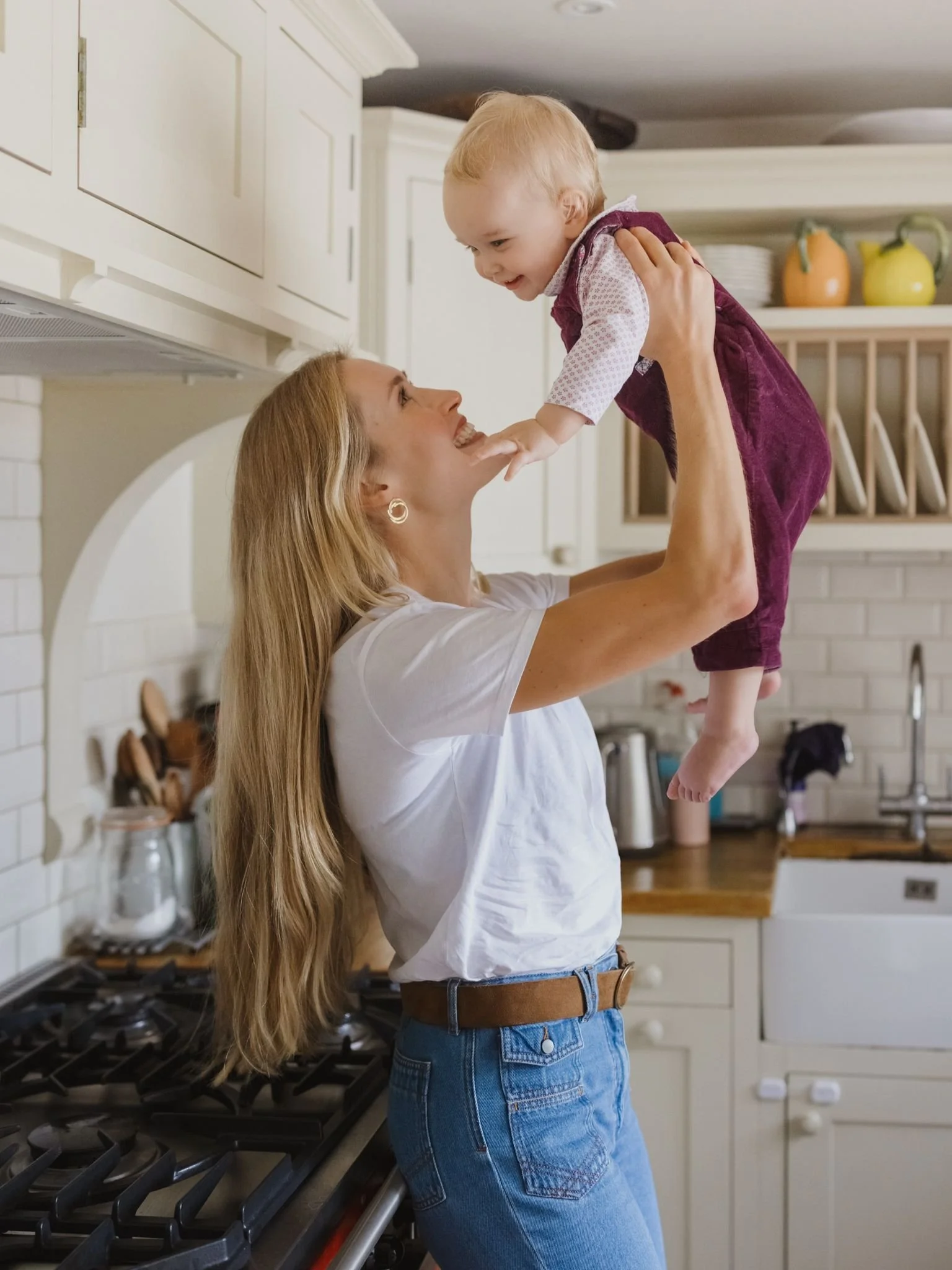
Anabel was born in deep winter and close to Christmas so I remember it got dark very early and naturally felt like a time to hibernate. I was lucky that my husband was able to be home with me those first couple of weeks and we spent the time very much cocooned in our new little world. We’d filled the freezer beforehand with lots of dahls and nourishing soups which was everything I craved in the early days of recovery. I had a c-section birth and I remember being eager to heal so that I could move my body. Exercise has always been the way that I unwind and I knew that I would find the recovery a challenge. I made sure to sleep as much as I could but also to try and get outside whenever I could. I still remember the first time that I left the house just to walk five minutes down the road to the pharmacy. It felt like a huge milestone at the time and was incredibly grounding.
Looking back, what do you wish had been more available to you in those early weeks postpartum?
I was lucky to have some amazing community midwives who were so kind and generous with their wisdom and emotion. I always felt like I’d been seen and heard after they visited but I almost wish I could have seen them more or for longer and of course they have lots of new mothers to check in on. There is so much that goes on for you emotionally once you have a child and I think it’s really important to have an outlet and ear outside of your partner to talk to. If I could wave a magic wand I’d make sure that every new mother had weekly support with someone to just listen to them and guide them in those very early stages of motherhood.
How did becoming a mother affect how you saw yourself, both positively and negatively?
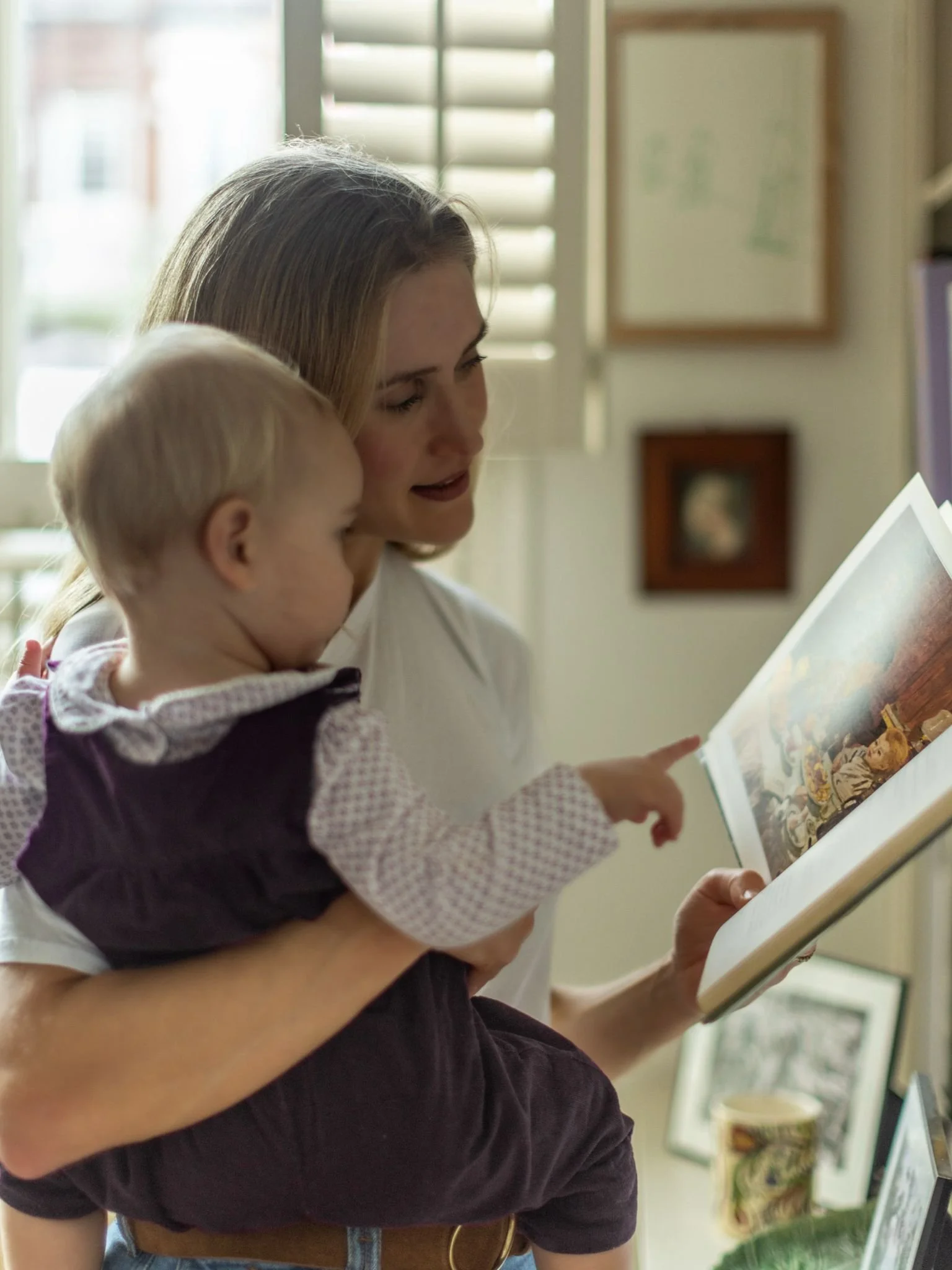
I was nervous about becoming a mother. For a long time I wasn’t sure if I wanted children until one day I suddenly did. It was quite sudden and I think really came from the love I had for my husband. He always wanted children and I think part of it was knowing that I wouldn’t be alone and that it would be a journey we shared. I’ve always been a very independent person. I love spending time on my own and although I’m probably an extrovert I need time alone to recharge. I worried I’d lose that having children and in a sense I have.
My thoughts and daydreams never feel as expansive as they once did because they are always grounded by the fact that I have a little girl and that she is my priority. Sometimes I do find that hard. But although it feels different and I can’t indulge in the possibility of travelling across the world anymore, I think what brings me most joy has shifted too. I value home more than ever now and it’s my family that are really my home. I’m far more present than ever before, rather than always planning ahead or looking back at the past. I find joy in the small rituals and genuinely feel more grounded. My tolerance for drama has lessened as well and I’d say that is a good thing. I find it far easier to say no to things rather than always being saying yes for fear of letting people down. I feel like my boundaries are stronger and I feel more connected to what really matters which is my family.
What would you want other new mothers to hear or know?
Honestly I don’t think we know enough about just how hard those early days of motherhood can be but also how normal that is. I had no idea about all the bleeding for instance and found it quite traumatic. I knew my baby would be in nappies. I didn’t know that I would. I was lucky that I had some brilliant friends who were already mothers to guide me on the difficulties of breastfeeding, from chapped nipples to difficult latches. There isn’t enough free access to help with feeding and I think the stigma and pressure that surrounds breastfeeding is far too weighted. I was lucky that I was able to breastfeed Anabel for 8 weeks but in the end I had to stop as she had a severe CMPA which meant she couldn’t tolerate my breastmilk. I gave up gluten, dairy, eggs, soy and did everything in my power to help her but in the end I had to stop. Even with the knowledge that my stopping breastfeeding and her having formula was better for her I still felt such a deep sense of shame and failure for not being able to breastfeed. I have friends who have also struggled and had similar feelings and it’s something that I think society places too much judgement on. It’s wonderful to be able to do it and I’m grateful that I did but ultimately the most important thing is that both you and baby are happy and healthy.
What part of yourself did you discover (or rediscover) through the postpartum journey?
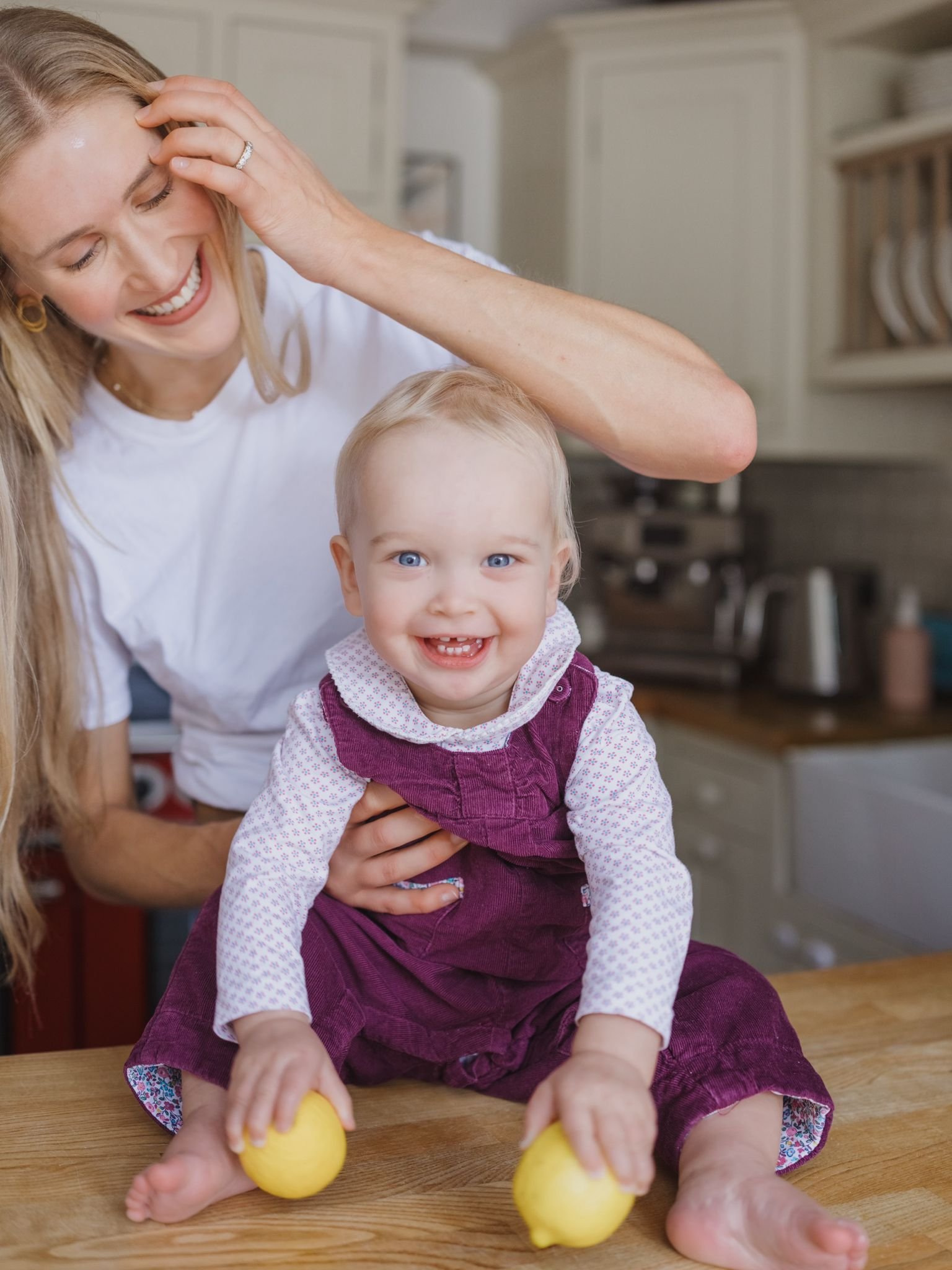
Becoming a mother has given me an incredible sense of strength and confidence. I often doubt my ability and it can often lead to huge anxiety especially in making decisions. Previously I could feel paralysed by the decision making process, worried I’d make the wrong one. But my gut feeling is so much stronger now and I’ve really learnt to trust it.